Ovulation bleeding: Is it normal, warning signs & what it means

Iona Nelson

Maja Garbulinska

Follows NC° Editorial Policy
At Natural Cycles, our mission is to empower you with the knowledge you need to take charge of your health. At Cycle Matters, we create fact-checked, expert-written content that tackles these topics in a compassionate and accessible way. Read more...
Key takeaways:
-
Ovulation bleeding is a light spotting that happens approximately mid-cycle, and lasts for one to two days
-
Not everyone experiences ovulation bleeding, and while more research is needed, it is thought to be caused by natural hormonal fluctuations
-
You can use panty liners during ovulation bleeding to prevent stains or leaking, and tracking your ovulation can help you prepare in advance
-
Ovulation bleeding is typically not a cause for concern, but speak to your doctor if you have any worries about spotting between periods
Have you ever noticed light pink spotting in the middle of your cycle? It could be ovulation bleeding! Spotting during ovulation is common, but remains somewhat mysterious. In this article, we’ll dive into what ovulation bleeding is, what may cause it, how long it lasts, and what you can do to manage it.
What is ovulation bleeding?
Ovulation bleeding is light bleeding, sometimes called spotting, that occurs around the time of ovulation, when the ovaries release a mature egg cell [1]. Ovulation has previously been assumed to happen near the midpoint of your menstrual cycle, around day 14, based on cycles that are 28 days long. But a Natural Cycles study of more than 600,000 ovulatory cycles found that the timing of ovulation varied from person to person. In regular cycles between 21 and 35 days long, ovulation occurred on average around day 15. In shorter regular cycles, ovulation averaged day 12, and in longer regular cycles, day 19 [2]. This means that ovulation bleeding can vary between individuals, depending on their unique cycle length and ovulation timing.
How common is ovulation bleeding?
It is difficult to know how common ovulation bleeding is due to the lack of scientific research on the topic, and most reports are anecdotal. However, one study of over 200 women found that 5% of participants experienced mid-cycle bleeding that typically lasted around one to two days [3].
What causes ovulation bleeding?
Though it is yet to be confirmed, natural hormonal fluctuations are the leading theory for what causes ovulation bleeding. To understand this further, let’s recap what happens during ovulation.
Ovulation is the release of a mature egg cell from a follicle in the ovary. At the end of the follicular phase (right before ovulation), levels of estrogen are high, followed by a surge in luteinizing hormone, which triggers ovulation [1]. These hormonal changes around ovulation may contribute to light mid-cycle spotting, sometimes referred to as ovulation bleeding [3].
The hormonal theory is supported by the study mentioned above, which found that the participants who reported mid-cycle bleeding had higher estrogen levels around ovulation and during the luteal phase, higher luteal progesterone levels, and higher luteinizing hormone levels around ovulation [2].
What does spotting during ovulation look like?
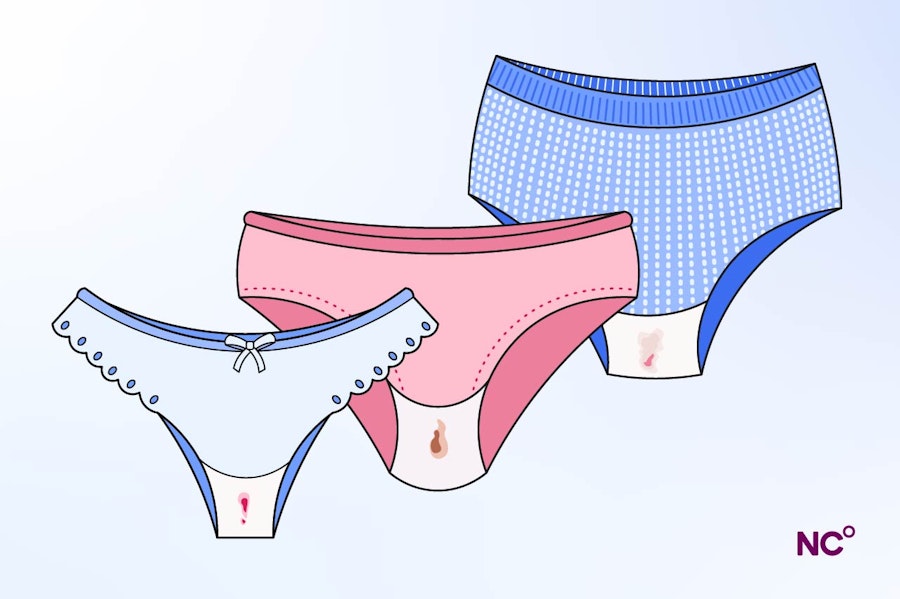
Spotting during ovulation is usually a very light bleed, which doesn’t warrant using a tampon. You might notice it in your underwear or on toilet paper after using the bathroom. It can sometimes appear as pink discharge and may mix with the egg-white-textured cervical mucus that is common around the time of ovulation [4]. Ovulation bleeding usually only lasts for one to two days [3].
Not every instance of spotting is ovulation bleeding, though. Other than your period, there are several other possible reasons why you might experience spotting or bleeding:
- Pregnancy: It’s common to experience light bleeding in early pregnancy, and this can happen for many reasons, including as a result of implantation, although it’s always best to get it checked out [5].
- Hormonal birth control: It’s common for spotting to occur when you first start hormonal birth control or when switching between methods (known as breakthrough bleeding), but it can happen at other times, too. For example, when you take a break or take sugar pills between pill packets. This type of spotting is known as a withdrawal bleed [6, 7].
- Uterine fibroids or polyps: These are noncancerous growths in or around the uterus that can cause bleeding [8].
- STIs: Some sexually transmitted infections (STIs), like chlamydia, can cause bleeding [9].
- PMOS (formerly PCOS): Irregular bleeding is a common sign of polyendocrine metabolic ovarian syndrome (PMOS) [10].
- Perimenopause: When our bodies start transitioning towards menopause, periods become more irregular, and we may also start experiencing some spotting between periods [11].
- Gynecological cancer: Cervical, uterine, vaginal, and ovarian cancer can cause bleeding in some cases, though these are rare[12].
Unexpected bleeding is not always serious, but it is always best to speak to your doctor or healthcare provider if you have concerns about spotting between periods.
How to manage ovulation bleeding
To know if the spotting you are experiencing is related to ovulation, it can help to track your cycle. Natural Cycles uses biomarkers and a one-of-a-kind algorithm to predict ovulation. You can track spotting or discharge in the app and notice any links between ovulation and symptoms, helping you prepare for ovulation bleeding in advance.
If you are worried about leaking or stains from ovulation bleeding, you can wear a panty liner around the time of ovulation. Some people also experience ovulation cramps, with or without bleeding [13]. If you notice cramping and feel uncomfortable or in pain, over-the-counter painkillers may help.
Remember, ovulation bleeding shouldn’t be heavy enough that you need a tampon and should not last for more than one or two days. If you are experiencing heavy or painful mid-cycle bleeding, speak to your healthcare practitioner.
When to see a doctor
Ovulation bleeding is usually your body’s natural reaction to the hormonal changes during ovulation. Generally speaking, most of us will experience irregular periods or spotting at some point in our lives, and it is usually nothing to be concerned about. However, you should always speak to your doctor or healthcare provider about any unexplained bleeding, especially if you are experiencing additional symptoms, such as:
- Discharge with an unusual odor, consistency, or color
- Itching or pain in the vulva or vagina
- Pain or bleeding during or after sex
- Severe pain at any time in your cycle
- Cycles that are shorter than 21 days or longer than 35 days
- A cycle length varies by more than 7-9 days
- Having no period for three months or longer
- Very heavy periods that soak through tampons or pads every 1 to 2 hours
- Periods that last longer than 7 days
[14]
Know when you are ovulating
Knowing when you are ovulating can make it easier to determine whether your spotting is due to ovulation and help you feel empowered when speaking with your doctor. The NC° app lets you see where you are in your cycle from the palm of your hand, and predicts when your next ovulation is likely to occur. By logging spotting and other symptoms in the app, you can start to notice patterns between symptoms and certain times in your cycle.
At the end of each cycle, you’ll receive a cycle summary outlining the main characteristics, such as cycle length and ovulation day, and you can download a comprehensive six-month cycle report to share with your doctor. Understanding which day of your cycle you are on, when you experience spotting, and how long your cycle usually is can help you feel prepared for any discussions with healthcare providers. Get started today and take control of your reproductive health with the FDA-cleared birth control app, Natural Cycles.
Did you enjoy reading this article?
Frequently asked questions