Vaginal wetness: Types, causes & what is arousal fluid?

Karolina Wilde

Maja Garbulinska

Follows NC° Editorial Policy
At Natural Cycles, our mission is to empower you with the knowledge you need to take charge of your health. At Cycle Matters, we create fact-checked, expert-written content that tackles these topics in a compassionate and accessible way. Read more...
Key takeaways
- Vaginal discharge can look and feel different depending on what’s causing it
- Cervical fluid is a type of vaginal discharge with a wet and sticky consistency that fluctuates throughout your menstrual cycle
- Arousal fluid is a clear and wet type of vaginal discharge that occurs as part of a physiological reaction to sexual stimuli
- Most vaginal discharge is healthy, but it can be a cause for concern if it is accompanied by a foul smell, or pain or discomfort in the vaginal or vulva area
On this page
- What is vaginal discharge?
- How to tell arousal fluid from cervical mucus and everyday discharge
- Why can't I get wet? Factors that impact arousal fluid
- Why you might feel wet without being aroused
- Is vaginal discharge part of "squirting"?
- Other causes of vaginal wetness
- When to see a healthcare professional
- Understand your body better
The beautiful thing about the vagina is that it has a self-cleaning mechanism, and vaginal wetness is part of the process. There are many misconceptions about vaginal fluids, but the truth is that it's usually completely natural and nothing to be ashamed of or worried about. One of the best ways to tackle stigma is to understand how our bodies work. So, let's talk about different vaginal fluids and why we experience vaginal wetness.
What is vaginal discharge?
Vaginal discharge is an umbrella term that describes all non-period fluids the vagina secretes. The fluid that comes out of the vagina consists of cells from the cervix and vagina, bacteria, mucus, and water [1]. It might also contain sperm after having sex without using a barrier method. There are two main types of vaginal and vulvar discharge you might experience:
- Cervical fluid: The vaginal discharge produced in the cervix. Its consistency and appearance might vary depending on where you are in your cycle [2] — thinner and more watery before and around ovulation and thicker afterward.
- Arousal fluid: A clear, slippery, and odorless fluid that appears when our bodies are physically aroused. It seeps through the vaginal walls when blood flow to the area increases [3], and the Bartholin glands located near the vaginal opening also produce a small amount of this fluid [4]. It's important to note that the appearance of arousal fluid alone doesn't equal sexual consent. It's a physiological reaction to stimuli we have no control over. Verbal, enthusiastic consent is the most important factor in determining whether or not someone is ready for a sexual encounter.
The amount of vaginal discharge varies a lot from person to person, and it changes across your cycle. Studies have measured anywhere from less than a milliliter to a few milliliters a day, with the biggest amount of discharge appearing around ovulation for most people. In most cases, the discharge appears clear or white. Some natural scent is completely normal, too. Vaginal fluid has its own mild odor, and research suggests even healthy discharge doesn’t smell like nothing [5]. If the scent is strong or unpleasant enough that you feel that you need to cover it up with sprays or deodorants, you may have a medical condition and should contact your doctor [1]. Douching or using special fragrances for the vagina may do more harm than good, so avoid using those and seek medical advice instead.
The way the vaginal discharge looks and smells might fluctuate throughout the menstrual cycle and change after giving birth or going through menopause. Taking hormonal birth control might also alter how it feels and looks. While some studies suggest that hormonal contraceptives promote a stable microbiome (the community of bacteria that helps keep the vagina healthy) dominated by Lactobacillus species, others report no significant changes in the vaginal microbiome [6].
How your body makes arousal fluid
Vaginal wetness when we’re aroused is mostly due to increased blood flow. When we’re turned on, whether because of touch, thoughts, or something we’ve seen or read, our nervous system sends more blood to our genitals. The tissues of the vulva and vagina swell, and the pressure from all that extra blood pushes a clear, watery fluid through the walls of the vagina into the vaginal canal [3]. This fluid is our body’s natural lubrication.
How to tell arousal fluid from cervical mucus and everyday discharge
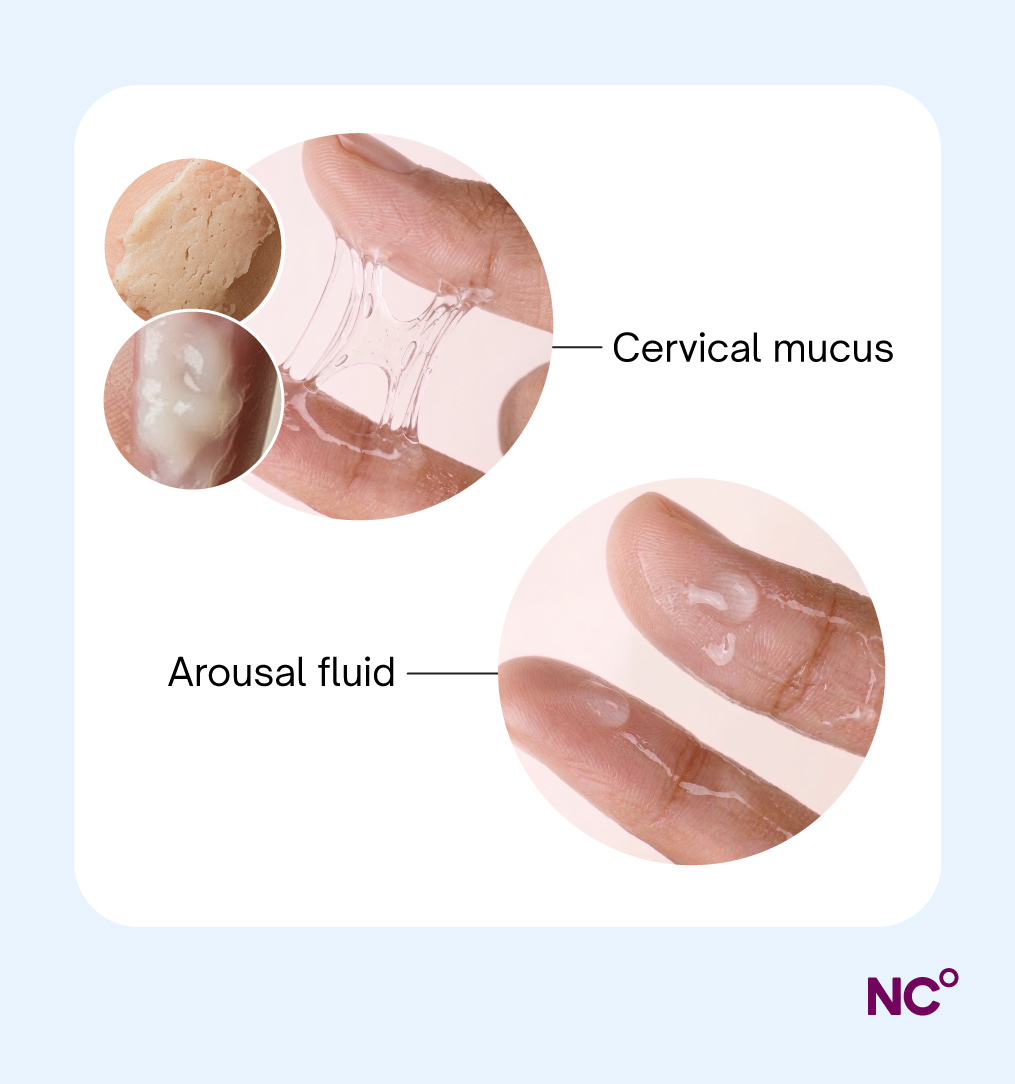
If you’re confused about telling all the different vaginal fluids apart, you’re definitely not alone. All three are clear-to-white, show up in your underwear, and give you the sensation of wetness, so it’s no wonder people mix them up. Here’s how to tell each apart:
- Timing: Arousal fluid is present when you’re turned on. It presents itself in the moment and goes away soon after. Regular daily discharge builds gradually over the day and is there most days. Cervical mucus comes and goes with your cycle, appearing leading up to the fertile window.
- Texture: Arousal fluid is thin, slick, and slippery, very similar to water-based lubricant. Cervical mucus, on the other hand, changes with your cycle. As Natural Cycles Medical Advisory Board Member Dr. Wong explains: "Cervical mucus changes throughout the cycle in response to hormones and can provide clues about where someone is in their cycle. Around ovulation, discharge often becomes clear, slippery, and stretchy, which helps sperm travel through the reproductive tract."
- How long it lasts: Because arousal fluid is tied to being turned on and happens due to increased blood flow, it tends to fade away as desire does. Discharge and cervical mucus amounts may vary over the course of your menstrual cycle, with cervical mucus appearing around the fertile window of the cycle.
Why can't I get wet? Factors that impact arousal fluid
We already touched on the fact that the presence of arousal fluid doesn't mean you're ready for or agreeing to sex. Sometimes, the opposite might happen — in your mind, you feel horny and ready for sex, but you might be lacking vaginal wetness. That's called arousal non-concordance, and it happens to many people [7]. Multiple factors might influence our sexual concordance. One of them could be our views on sexual double standards.
Many factors might influence physiological arousal. Because arousal fluid is driven by blood flow, anything that affects blood flow, hormones, or your ability to relax during intimacy can affect how wet you get. The good news is that most of the causes are easy to identify, and many are fixable. Here’s what may be affecting your arousal levels:
Menstrual cycle
Our hormones play a significant part in the production of vaginal discharge, especially the arousal fluid. During certain parts of the menstrual cycle (around ovulation), our bodies might produce more arousal fluid, and we might feel more aroused because estrogen levels surge [8]. As Natural Cycles Medical Board Advisor Dr. Sarah Oreck explains, around ovulation, "a peak in estrogen and a surge in luteinizing hormone (LH) can lead to heightened libido and, for some, increased confidence."
Increased estrogen thins cervical mucus, making it clear and elastic to allow sperm to move more easily. There might also be an increase in the amount of discharge during this time of the cycle — the amount of cervical mucus might increase up to 30 times compared with the early follicular phase [8].
Contraception and other medications
Hormonal birth control might impact the amount of arousal fluid we experience [6]. Depending on what hormonal option you choose, your body might produce less or more arousal fluid. It’s important to note that hormonal birth control is not the only medication that can affect arousal fluid production. Other medications and treatments, including antidepressants and some cancer treatments such as chemotherapy, are known to cause vaginal dryness because they can affect hormone levels [9]. So, if you notice a change in your arousal after starting a new medication, it’s worth mentioning to your doctor.
Menopause
Hormonal changes that occur in our bodies during perimenopause and menopause can also impact the amount of arousal fluid our bodies produce. During the menopausal transition, estrogen levels fluctuate and eventually decrease during the years after menopause, which might cause our bodies to produce less lubrication [10]. One great way to combat the vaginal dryness that happens due to an estrogen drop is to use a personal lubricant to supplement your natural lubrication. Water-based lubes work well for many people – they’re safe to use with toys and condoms, don’t stain the sheets, and are easy to clean. If dryness is linked to perimenopause or menopause, your doctor may prescribe a low-dose estrogen cream, gel, or pessary to apply directly to the vagina. It works locally rather than throughout the body, and many people find it effective [9].
Mood
Sometimes, we might not feel entirely in the mood for sex. It could be due to stress, lack of sleep, relationship problems, depression, or anxiety. If you find it challenging to concentrate on intimate activities and what's happening in the moment, your body might have trouble producing enough arousal fluid.
If that's the case, communicate your feelings to your partner. Avoid engaging in activities you don't want to. Instead, take a break, talk about what might be influencing your mood with your partner, and find other ways to connect and feel intimate with each other. As one Natural Cycles user, Caroline, puts it, what matters is "being honest about your mood and feeling of pressure from surrounding life at the moment, and how we can prioritize intimacy consistently."
Not enough foreplay
Foreplay has an important role when it comes to arousal. If you're not receiving enough foreplay before intercourse or don't enjoy the foreplay activities you engage in, it might be difficult for your body to become aroused. A solution might be to figure out what type of foreplay you enjoy the most and communicate your needs and wants to your partner so you can spend more time on the foreplay you enjoy.
If you’re not sure where to start and want to learn more about how to get wet, here are a few foreplay techniques you might want to experiment with:
- Spend more time kissing: Kiss your partner more often! From a sweet peck on the cheek to an hour-long make-out session on the sofa, kissing can greatly improve arousal.
- Try a sensual massage: A full-body sensual or erotic massage as a form of foreplay is a great way to increase desire and prepare your body for sex. A massage helps you relax, which might help you get in the mood.
- Experiment with erotic material: Consume erotic content as part of the foreplay experience, either solo or with a partner – audio erotica, porn, or an erotic novel.
- Play with toys: If you have a favorite sex toy, consider using it during foreplay to help your body get aroused.
Why you might feel wet without being aroused
If you are not aroused but experience vaginal wetness, there are a few reasons why this could be happening.
Everyday discharge
As we briefly touched on before, vaginas are self-cleaning and vaginal discharge is part of that process. Through the discharge of fluids, the vagina eliminates bacteria, old cells, old sperm, and other things to keep the microflora healthy and thriving.
Vaginal sweat
You might not know this, but there are tons of sweat glands located in the crotch area around the vulva and vagina [11]. So, if you're not aroused but experience vaginal wetness, it could be vaginal sweat. You might feel wet down there after workouts or when you're stressed because that's when we tend to sweat more.
Stress incontinence
If you experience an increase in vaginal wetness when you cough, sneeze, laugh, run, or lift heavy objects, it might actually be due to stress incontinence. This is a type of urinary incontinence when you unintentionally pee because there is excess pressure on the bladder [12].
If you experience stress incontinence, there are ways that might help. Maintaining a healthy weight, avoiding excess alcohol and caffeine, and doing exercises to strengthen your pelvic floor muscles can help improve the condition [12]. If you have access to one, seeing a pelvic floor physiotherapist can make a big difference, too.
Is vaginal discharge part of "squirting"?
Technically, squirting is a type of vaginal discharge. There are a lot of misconceptions about squirting, so let's clear some things up. Most often, people think squirting is the same as female ejaculation, but that's not quite true. These are two different bodily experiences:
- Squirting fluid: A clear, thin fluid that's produced in the bladder and released from the urethra. It might appear during an orgasm or without one. Squirting fluid comes from the bladder and is similar to diluted urine, though research suggests it also contains other secretions [13].
- Female ejaculation: A thick, white, milky fluid that's produced in Skene's Glands (small glands located on the anterior wall of the vagina, near the urethra) and released from the urethra. It might appear right before an orgasm or after, or without an orgasm at all. Only a few milliliters of fluid are released, and some people might not even notice it. It contains no urine [13].
Experiencing female ejaculation or squirting is completely normal and nothing to be ashamed of. However, everyone's bodies are different, and not every vagina might be able to ejaculate or squirt. That's also completely normal and doesn't mean there is anything wrong with your body.
Other causes of vaginal wetness
Sometimes certain conditions might influence how much or little vaginal discharge we experience. You might want to be aware of these factors:
Vaginal yeast infection
A yeast infection happens when our natural vaginal microflora is disrupted by an overgrowth of fungi from the Candida family, most commonly Candida albicans. It's very common, and there are multiple symptoms that accompany the infection. One symptom is a thick, white discharge that looks like cottage cheese, along with redness and itching [14].
It’s important to know that a yeast infection is not a sexually transmitted infection and often appears independently of sexual activity. However, it can sometimes be passed to your partner during sexual contact. There are several ways to prevent and treat vaginal yeast infections, so make sure you contact your healthcare provider if your symptoms don’t improve after a few days [14].
Sexually transmitted infections (STIs)
An increase in vaginal discharge accompanied by the color turning yellow, gray, or green might happen due to certain sexually transmitted infections like chlamydia, gonorrhea, and trichomoniasis. These infections can be easily treated with antibiotics, so make sure you contact your healthcare provider if you have an unusual discharge. If untreated, it can lead to serious health problems, especially in women [15].
Cervical cancer
In very rare cases, an increased amount of vaginal discharge might be a sign of cervical cancer. There are other symptoms that might be present, too, like bleeding after sex, painful intercourse, and pelvic pain [16]. Cervical cancer can be easily prevented with frequent screening. Contact your healthcare provider to understand the tests and frequency that are recommended for your particular situation.
Bacterial vaginosis
Another fairly common reason for increased vaginal discharge could be bacterial vaginosis. It’s important to know that bacterial vaginosis is not a sexually transmitted disease, but it is more common in sexually active people [17]. It's a vaginal infection that's caused by an overgrowth of harmful bacteria inside the vagina. While some of these bacteria are normally present in small amounts in the vagina, they become problematic when they overgrow and disrupt the natural balance of the vaginal bacteria. The change in the amount, color, and smell of vaginal discharge is one of the most common symptoms [18].
Pregnancy
During pregnancy, people often experience excessive amounts of vaginal discharge. In most cases, it's totally normal. It's our body's natural way to protect the fetus from any infections getting inside the uterus [19]. During pregnancy, your body creates a mucus plug to protect the fetus from infection. This is naturally dispelled before the onset of labor and can appear as a type of brown discharge known as “the show”.
If you experience any red or pink discharge, you should talk to your doctor. While bleeding in early pregnancy isn’t always a sign of miscarriage, it’s important to rule out any complications.
When to see a healthcare professional
While vaginal discharge is normal and healthy in most cases, sometimes it might be a reason for concern and a visit to your OBGYN. “Signs that discharge may warrant a closer look include a change in color, odor, amount, or consistency compared to what is normal for you,” says Dr. Wong. Here are a few instances when you might want to book an appointment with your doctor:
- If you notice a sudden change in the consistency, color, or smell of your vaginal discharge and it looks different than what you're used to
- If the vaginal discharge is accompanied by unpleasant symptoms like pain, itchiness, redness, or burning sensations
- If the vaginal discharge has changed color to yellow, green, or gray
- If there is a strong, foul smell
- If you notice a cottage cheese-like texture
- If you experience red or pink discharge during pregnancy
- If you've had vaginal dryness for a few weeks and lube or moisturizers aren't helping, or it's affecting your daily life or sex life [9]
Any of these symptoms might indicate that there is an infection or other health concern. Your doctor will be able to run some tests and prescribe the right treatment for your situation.
Understand your body better
Each of our bodies is different, and what's normal for you might look different from what's normal for someone else — that's the beauty of the human body! At Natural Cycles, we believe in the importance of knowing your body well and the confidence that comes with it. Our FDA Cleared Birth Control app is designed to help you track and understand the changes you experience throughout your cycle — variations in your vaginal discharge included — so you can feel empowered on your fertility journey.
Did you enjoy reading this article?
Frequently asked questions