Hymen: What is it, anatomy & function

Iona Nelson

Maja Garbulinska

Follows NC° Editorial Policy
At Natural Cycles, our mission is to empower you with the knowledge you need to take charge of your health. At Cycle Matters, we create fact-checked, expert-written content that tackles these topics in a compassionate and accessible way. Read more...
Key takeaways
-
The hymen is a thin, stretchy membrane at the opening of the vagina, usually with a hole for menstrual blood to pass through
-
There is no known function of the hymen, but it changes as we age, influenced by the hormone estrogen
-
There is a common myth that the hymen is only torn or “broken” during sexual intercourse, and an intact hymen is proof of virginity, but this is inaccurate
-
The hymen may tear from sport or using a tampon, and sometimes the hymen stretches during intercourse instead of tearing
The hymen is a frequently misunderstood part of our anatomy, often associated with myths regarding virginity and misleading terms such as “popping your cherry”. But what exactly is the hymen, then? In this article, we will explain what a hymen is, what it looks like, and how it changes as we age. We’ll also debunk some common myths about the hymen so you can separate fact from fiction. Because knowledge is power, after all!
What is a hymen?
A hymen is a thin fold of tissue that surrounds or partially covers the opening of the vagina. It is present from birth, usually with a central hole to allow period blood to exit [1]. As we age, it tears, stretches, and changes, a natural process that most individuals do not notice [2], though some may experience mild vaginal bleeding known as spotting.
What does a hymen do?
The biological function of the hymen remains a mystery to scientists. We know the vagina develops initially as a solid tube. As you develop in the womb, the inner structure of the tube disintegrates, leaving behind a hollow structure, at the end of which is the hymen. For most, the hole in the hymen usually appears within the first few days of being born. In others, the hymen may already have an opening or will rupture earlier, and in rare cases, some babies are born with an “imperforate hymen” — a hymen without a hole [2]. Other than the hymen being a remnant of development in the womb, there is very little research into its purpose.
What does a hymen look like?
A hymen looks like a thin strip of skin with a hole in the middle. It is near the vaginal opening, and you may be able to see yours by looking at your vulva with a handheld mirror. However, it is normal for the hymen to wear away over time, and it can be hard to spot if you are past puberty.
Types of hymen
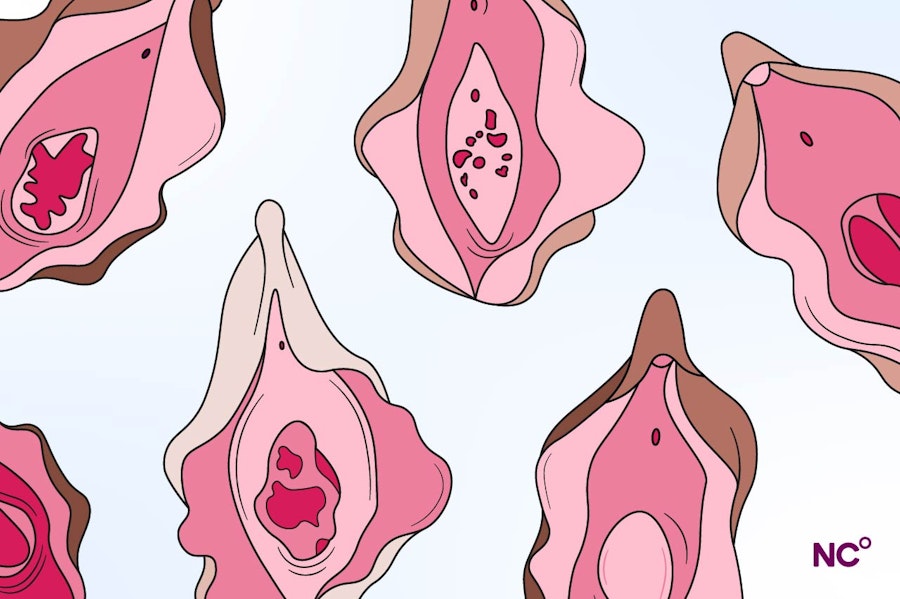
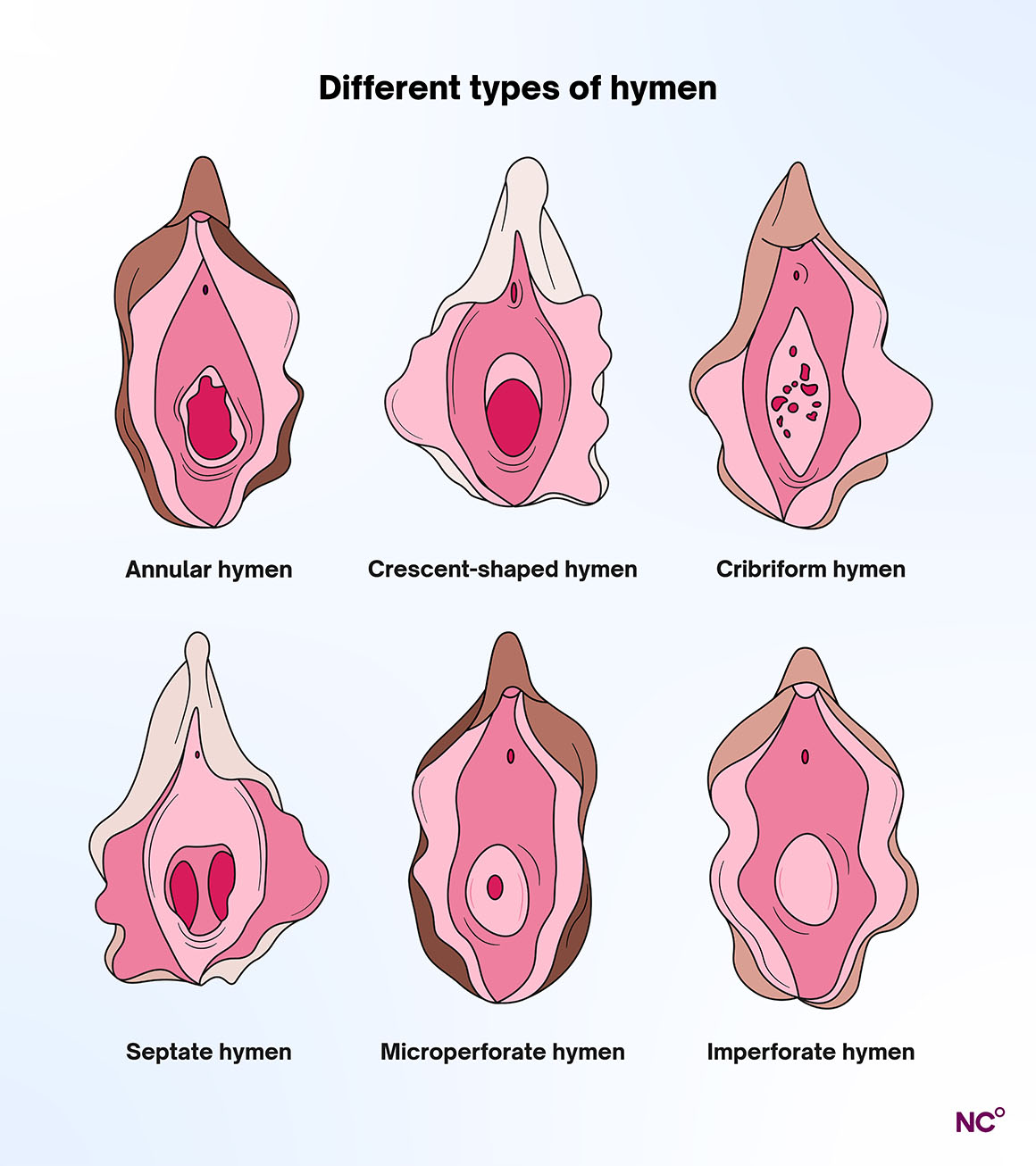
Though most hymens have one hole, everyone is different, and there are several types of hymens you can have.
- Annular or crescent-shaped hymen: This is the most common type of hymen, shaped like a donut or a crescent shape around the vaginal opening [1, 2].
- Cribriform hymen: This hymen covers the vagina and contains many small holes [1]. Period blood can pass through these, but it may make it difficult to insert a tampon.
- Septate hymen: This hymen has an extra piece of membrane, creating two smaller holes instead of one [1]. People with this type of hymen may find it difficult to use tampons.
- Microperforate hymen: The hymen covers the entire vaginal opening except for a tiny hole [2]. Period blood can flow out of that small hole, but it may be tricky to use tampons.
- Imperforate hymen: This is a condition where the hymen completely covers the vagina, stopping blood from exiting [2]. It can be painful but is rare, only affecting 1 in 1,000 to 10,000 girls [2].
If you are worried about your hymen, struggle with tampon use, or believe you have an imperforate hymen, speak to your healthcare provider.
How does a hymen change?
Although we do not know its function, we do know that the hymen changes with age. When you are born, your hymen is thicker and contains lots of blood vessels. The hymen’s skin then thins as you progress through childhood and becomes more fragile. During puberty and adolescence, rising estrogen levels cause the hymen to thicken again and become more elastic. If you become pregnant, the hymen becomes very thick and high in glycogen, and after a vaginal birth, not much of the hymen remains. During perimenopause, the hymen thins again in response to lower estrogen levels [1].
Myths about the hymen
Many false claims about the hymen are accepted as fact but lack scientific backing. Let’s look at the most common myths and clarify what is true and what is not.
Myth 1: A hymen covers the whole vagina
Many people believe a hymen is a “seal” that covers the vagina, emphasising the idea of “breaking” your hymen (more on that below). But for most people, the hymen only partially covers the opening of the vagina and has a hole for period blood to pass through, which is why you can still use tampons and have penetrative sex with the hymen present.
Myth 2: The hymen “breaks”
Many people refer to the hymen “breaking”, however this is not accurate. As we learned above, in most cases, the hymen does not create a seal over the vagina, and already has a hole in the center. Rather than breaking, the hymen is stretchy and more likely to wear and tear over time than to have a one-off break.
Myth 3: The hymen only breaks when you lose your virginity
In some cultures, there is an expectation that an intact hymen is a sign of virginity, and bleeding after having sex for the first time indicates the hymen has broken. However, this is inaccurate.
A hymen is a very elastic strip of skin and can stretch during penetrative intercourse without tearing [1, 3]. One study of 27 adolescents found that 52% of women examined still had their hymen intact — meaning no tears or splits — despite taking part in sexual intercourse, concluding that the appearance of the hymen alone cannot determine whether sex has occurred [4]. Most women will also not experience any bleeding during their first time having penetrative sex, and bleeding during or after sex is more likely to be caused by a lack of lubrication [2].
The hymen can also break for reasons other than sex. For example, insertion of a tampon or menstrual cup, masturbation with fingers or a toy, a pelvic exam or pap smear, and some vigorous sports activities can all tear the hymen [1].
For these reasons, the hymen (and bleeding) is not an accurate indicator as to whether or not an individual has had penetrative sex. In an interagency statement, the World Health Organisation, United Nations Human Rights Commission, and UN Women agreed there is no medical merit to examining the hymen as a sign of virginity, and called for the elimination of virginity testing — a practice in some cultures involving an examination of the hymen to determine if an individual has had penetrative sex or not [5].
Myth 4: Sex for the first time is supposed to hurt
You may have heard the phrase “popping your cherry”, referring to having sex for the first time. This phrase can create a false assumption that first-time sex is often painful and involves “breaking” the hymen barrier.
As we discussed above, the hymen does not “break”, and instead, it tears over time, whether due to sex or from non-sexual activities such as sport. Some people may experience mild pain during their first time, but for others, the experience will not feel painful. Instead, it is more common to feel mild discomfort, pressure, or stretching. Some women may experience minor bleeding, though this is also less common [2].
If you do experience pain during your first time having sex, this is often from a lack of lubrication or an involuntary “tightening” of the vagina, known as vaginismus [6]. Everybody’s first time is unique to them. The most important thing is that you feel comfortable, and clear communication with your partner can make your experience more enjoyable. Remember that both partners must have consented, and can change their minds at any time.
How to take care of your hymen
You don't need to do anything to take care of your hymen. The vagina is a marvel! Did you know the vagina is self-cleaning? Rinsing the vulva area with warm water and letting the vagina do its thing is often enough to keep this area healthy and clean. If you have any concerns about vaginal health, it is best to speak to your doctor.
Learn about your body with Natural Cycles
At Natural Cycles, our mission is to empower every woman with the knowledge she needs to take charge of their health. That’s why we built a product that can support you throughout the fertility journey and beyond. The NC° app is the first FDA-cleared birth control app, using biomarkers (such as temperature) to predict your period, ovulation, and fertile days. Spot patterns by logging symptoms such as discharge changes, cramps, and spotting, and download a cycle report to help you discuss any concerns with your doctor.
Whether you are looking for non-hormonal birth control, want to plan a pregnancy, are looking for support during perimenopause, or simply want to learn more about your body, Natural Cycles is here to help.
Did you enjoy reading this article?
Frequently asked questions